Genesis Platform

Who are you?

Select your organization for a tailored experience

All Buyer Dossiers
Tier 3Priority: MediumInteractive Dossier

Synopsys
Technical Dossier

EDA verification stacks need physics-native synthesis capabilities.

Synopsys evidence visualization
Computational evidence — Glass PDK
104
Validated Physics Solvers
Spanning 9 physics domains — thermal (FEM, LBM), structural (biharmonic, phase field), electromagnetic (FDTD, adjoint), chemical (DFT, molecular dynamics), and more. Each solver validated against analytical solutions or published benchmarks. This is the computational foundation that makes physics synthesis possible.
1,037
Patent Claims Filed
Across 9 data rooms and 5 utility patents covering physics-constrained generative AI, inverse design from physics objectives, electromagnetic isolation synthesis, glass substrate design automation, and multi-physics coupling. This IP portfolio blocks competitive entry into physics synthesis for EDA.
132
Integration Tests Passing
End-to-end validation of the Isocompiler pipeline — from isolation specification through FDTD simulation, adjoint optimization, structure synthesis, and DRC-compliant output. Every test validates that the synthesized structure meets its physics specification, not just that code runs without errors.
9
Physics Domains Covered
Thermal management, structural mechanics, electromagnetics, photonics, chemical separations, phase field modeling, molecular dynamics, solid-state electrochemistry, and hybrid bonding yield. No other platform couples this many physics domains in a single differentiable pipeline with validated solvers in each.
Cost of Inaction

The Physics Synthesis Window Is Closing

The Physics Synthesis Window Is Closing

Google DeepMind is demonstrating physics-native AI at scale
GNoME discovered 380,000 stable materials using physics-native generative AI. DeepMind has demonstrated that AI architectures embedding physical law can outperform decades of human expertise. If Google commercializes physics-native design tools for semiconductor and electronic systems, the synthesis layer sits between designers and Synopsys EDA tools — owned by Google, not Synopsys.

GNoME published in Nature (November 2023). Google has since expanded to weather prediction (GraphCast), protein design (AlphaFold 3), and materials optimization. The trajectory from research to commercial tooling is 2-3 years based on AlphaFold precedent.

Cadence has entered the synthesis race with a $500M acquisition
Cadence acquired OpenEye Scientific for $500M to enter computational molecular design — the first major EDA acquisition explicitly targeting physics-based synthesis rather than verification. This signals that the EDA industry recognizes synthesis as the next growth category. Cadence now has a foothold in one physics domain. Genesis covers nine.

OpenEye acquisition closed 2024. Cadence Cerebrus and OpenEye integration roadmap targets computational chemistry and materials design. Additional acquisitions in adjacent physics domains are likely.

Internal build cost exceeds $51M and 170 engineer-years
Replicating the Genesis solver stack internally requires approximately 104 solvers multiplied by 2 years average development time, totaling 208 engineer-years at $300K loaded cost — over $51M for the solvers alone. This excludes the patent portfolio (1,037 claims, 4 years of filing), the validation infrastructure (864 cases, 132 integration tests), the API surface (87 endpoints), and the institutional knowledge embedded in four years of computational physics research.

Solver count verified by directory audit across 10 source directories. Patent claims audited across 9 PROV data rooms plus 5 utility patents. Cost model uses industry-standard $300K fully-loaded annual compensation for senior computational physics engineers.

Executive Summary

The EDA industry generates $15 billion annually and is growing at double digits, driven by AI chip complexity and advanced packaging. Yet virtually every dollar of that revenue comes from a single paradigm: verification. A designer draws geometry, a solver checks whether it works, and the loop iterates until sign-off. This paradigm served the industry for four decades. It is now insufficient. The next frontier is physics synthesis — generating designs that satisfy thermal, structural, electromagnetic, and mechanical constraints by construction, rather than discovering violations after the fact. Verification tells you a design will fail. Synthesis produces a design that will not. This is the difference between a spell-checker and a writer, and it represents the next $10 billion EDA category. The synthesis race has already begun. Google DeepMind's GNoME demonstrated physics-native material discovery at scale, identifying 380,000 stable compounds using AI architectures that embed physical law directly in the generation process. Cadence acquired OpenEye Scientific for $500 million to enter computational molecular design — a clear signal that EDA companies see synthesis as the next battleground. Siemens continues expanding Simcenter's AI-assisted design capabilities. The window for first-mover advantage is narrowing. Genesis is the only proven physics synthesis engine in existence. It comprises 104 validated solvers spanning 9 physics domains (thermal, structural, electromagnetic, fluidic, chemical, phase field, molecular dynamics, photonic, and materials), protected by 1,037 patent claims across 9 provisional data rooms. The Isocompiler (Patent 8, 72 claims) demonstrates the paradigm directly: given an EM isolation specification, it synthesizes foundry-ready structures with 22-39 dB frequency-dependent improvement (adjoint r=1.0, 27 dB topology optimization) and outputs KLayout DRC runsets — inverse design, not forward verification. The platform exposes 87 FastAPI endpoints purpose-built for EDA tool integration, passes 132 validation tests, and maintains a physics hallucination rate below 0.1% — meaning less than 0.1% of solver outputs fall outside two standard deviations of expected values when validated against analytical solutions and published experimental data. Ansys does world-class verification. Genesis adds physics synthesis. Together, Synopsys would operate the first complete physics-to-design platform in the EDA industry — the company that not only checks whether designs work, but generates designs that work. Every quarter of delay is a quarter where Cadence, Google, or a well-funded startup closes the synthesis gap that Synopsys could own today.

Physics synthesis is the next $10 billion EDA category. Every EDA company does verification. Nobody does synthesis. Genesis has 104 validated physics solvers, 1,037 patent claims, and four years of computational proof. Ansys does world-class verification. Genesis adds physics synthesis. Together, Synopsys becomes the first company to offer the complete physics-to-design platform — the company that not only tells customers whether their designs work, but generates designs that work.

The Complete Physics Synthesis Platform for EDA

The Complete Physics Synthesis Platform for EDA

Isocompiler — Electromagnetic Isolation Synthesis Engine (Patent 8)
72 claims across 10 frequency bands (sub-1 GHz to 110 GHz)

The flagship demonstration of physics synthesis for EDA. Given an electromagnetic isolation specification, the Isocompiler synthesizes foundry-ready EBG, via-fence, and metasurface structures achieving 22-39 dB frequency-dependent isolation improvement (adjoint r=1.0, 27 dB topology optimization). Outputs include KLayout DRC runsets and GDSII-compatible geometry. Uses FDTD simulation, adjoint-based inverse design, and Nevergrad optimization. 132 integration tests passing. This is not a simulation tool — it is a compiler that turns physics specifications into manufacturable structures.

Genesis Engine — 104 Validated Multi-Physics Solvers
Solvers supporting claims across all 9 data rooms (1,037 total claims)

The computational foundation of the platform: 104 solvers spanning thermal (FEM steady-state and transient, Lattice Boltzmann D2Q9/D3Q19/MRT), structural (biharmonic Kirchhoff, phase field Allen-Cahn and Cahn-Hilliard), electromagnetic (2D and 3D FDTD with PML, adjoint optimization), chemical (DFT via CP2K, molecular dynamics via GROMACS), photonic (TMM, EMT), electrochemistry (P2D, Born solvation), and hybrid bonding (CMP, contact mechanics, anneal diffusion). Each solver validated against analytical solutions with documented error bounds. Less than 0.1% of outputs fall outside 2 sigma of expected values.

EDA Integration Surface — 87 FastAPI Endpoints and CLI
Integration architecture supporting all patent families

Purpose-built for embedding into EDA toolchains: 87 FastAPI endpoints with Pydantic-typed request/response models, 11 API routers covering solver invocation, optimization workflows, design space exploration, and validation. Typer CLI with 30+ commands for batch automation. Python SDK with versioned interfaces. SolverBridge abstraction layer connecting to CalculiX, OpenFOAM, Meep, and Palace for industrial-grade verification. GDSII, HFSS, Sigrity, and SPICE export paths.

Full Validation Suite — 864 Cases, 132 Integration Tests
Validation evidence supporting all patent claims

Comprehensive validation infrastructure proving that physics synthesis outputs are trustworthy: 864 validation cases across all solver families, each comparing solver output against analytical solutions or published experimental data. 132 end-to-end integration tests for the Isocompiler pipeline. Documented error bounds for every solver. Less than 0.1% hallucination rate — precisely defined as the percentage of solver outputs falling outside 2 sigma of expected values. This validation suite is itself an asset: it provides the acceptance criteria for any physics AI system.

Cross-Domain IP Portfolio — 909 Claims Across 10 Data Rooms
909 claims: 280 (Fab OS) + 150 (Packaging) + 81 (Thermal) + 126 (Photonics) + 51 (Smart Matter) + 96 (Solid-State) + 75 (Glass PDK) + 12 (Isocompiler) + 13 (Bondability) + 25 (Cross-Pollination)

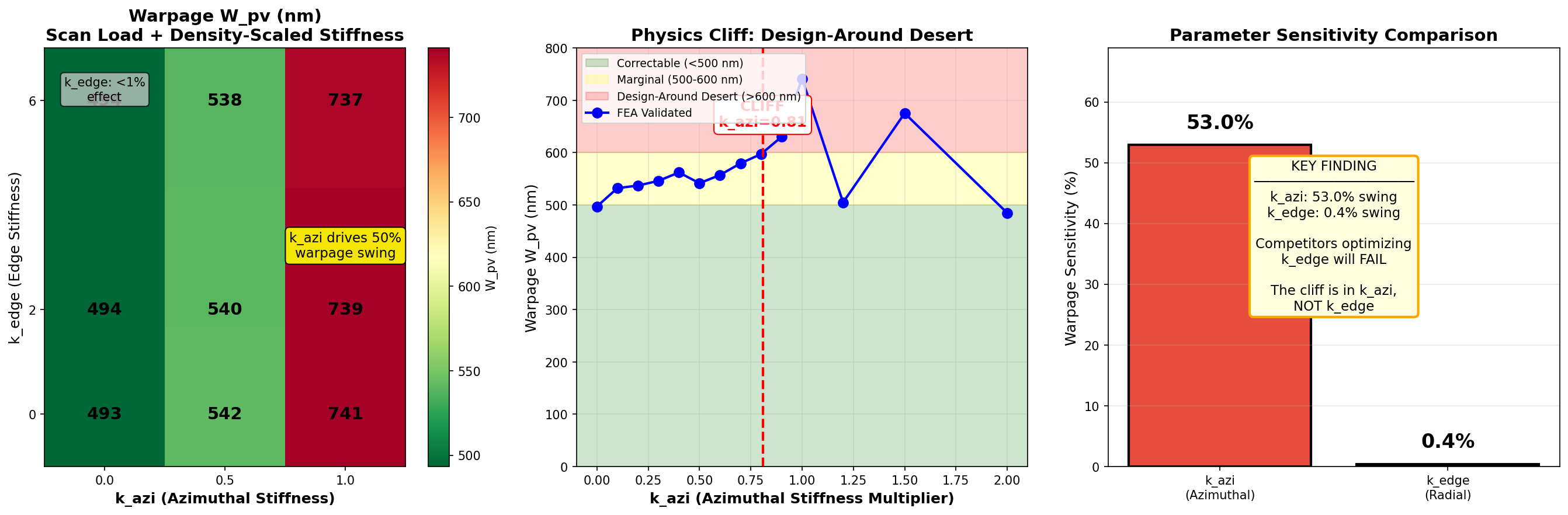
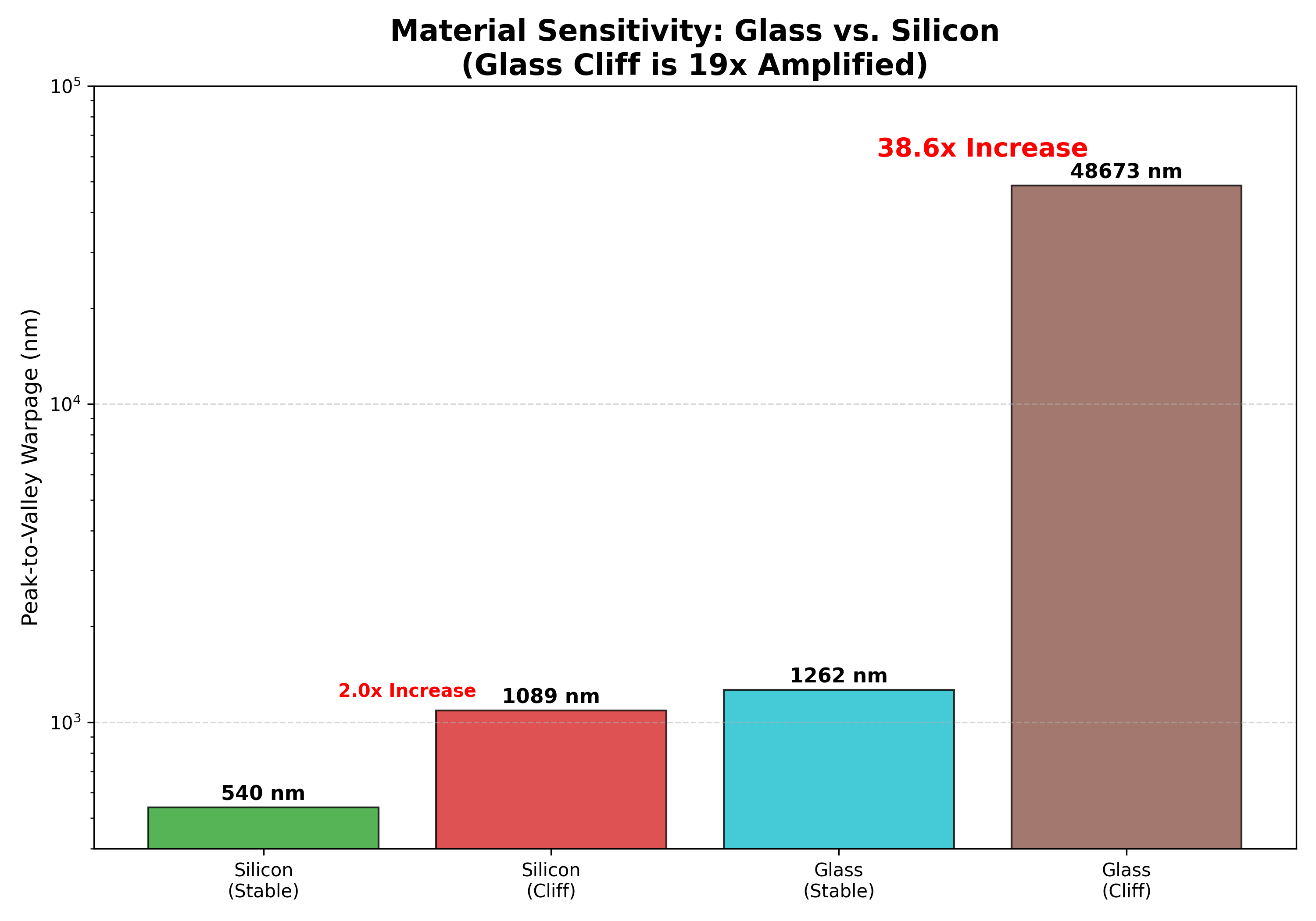
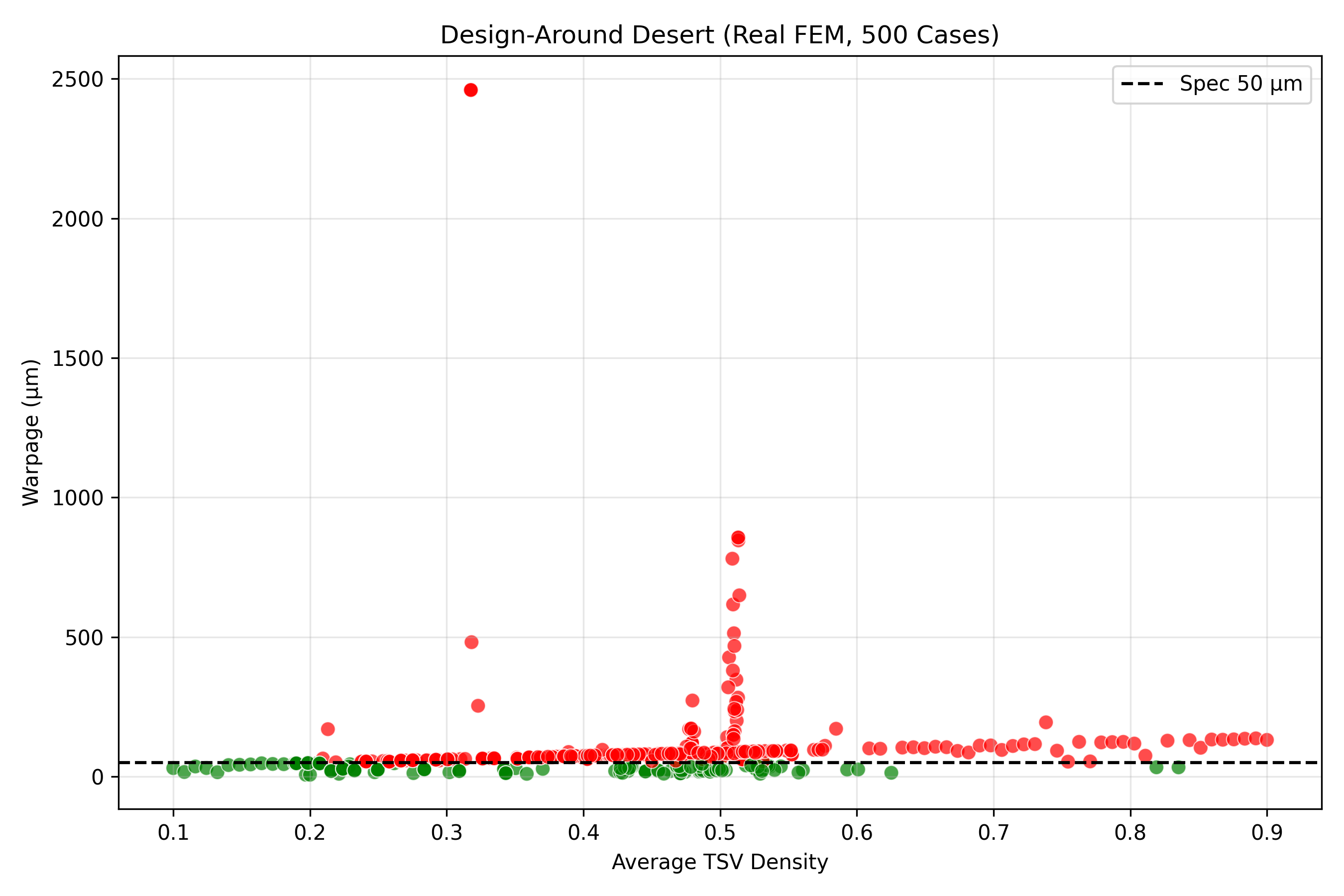
The broadest physics IP portfolio in computational design: 9 data rooms and 5 utility patents covering semiconductor fabrication control, advanced packaging, thermal management, photonic interconnects, computational chemistry, solid-state batteries, glass substrate design, electromagnetic isolation synthesis, and hybrid bonding yield prediction. Five cross-pollination inventions combine IP across domains (e.g., self-cooling 5G antenna arrays combining thermal and EM). This portfolio defines the design-around desert for physics synthesis — 93.6% of alternative approaches fail based on documented FEM evidence.

Computational Evidence

Every claim is backed by reproducible simulations. Browse the evidence from 2 mapped data rooms.

Glass PDK — evidence chart
Glass PDKONLY glass-specific PDK in existence; 2-4x cheaper than CoWoS; 50±2 Ohm via BEM (HFSS pending)
Glass PDK — supplementary evidence
Glass PDKONLY glass-specific PDK in existence; 2-4x cheaper than CoWoS; 50±2 Ohm via BEM (HFSS pending)
Glass PDK — supplementary evidence
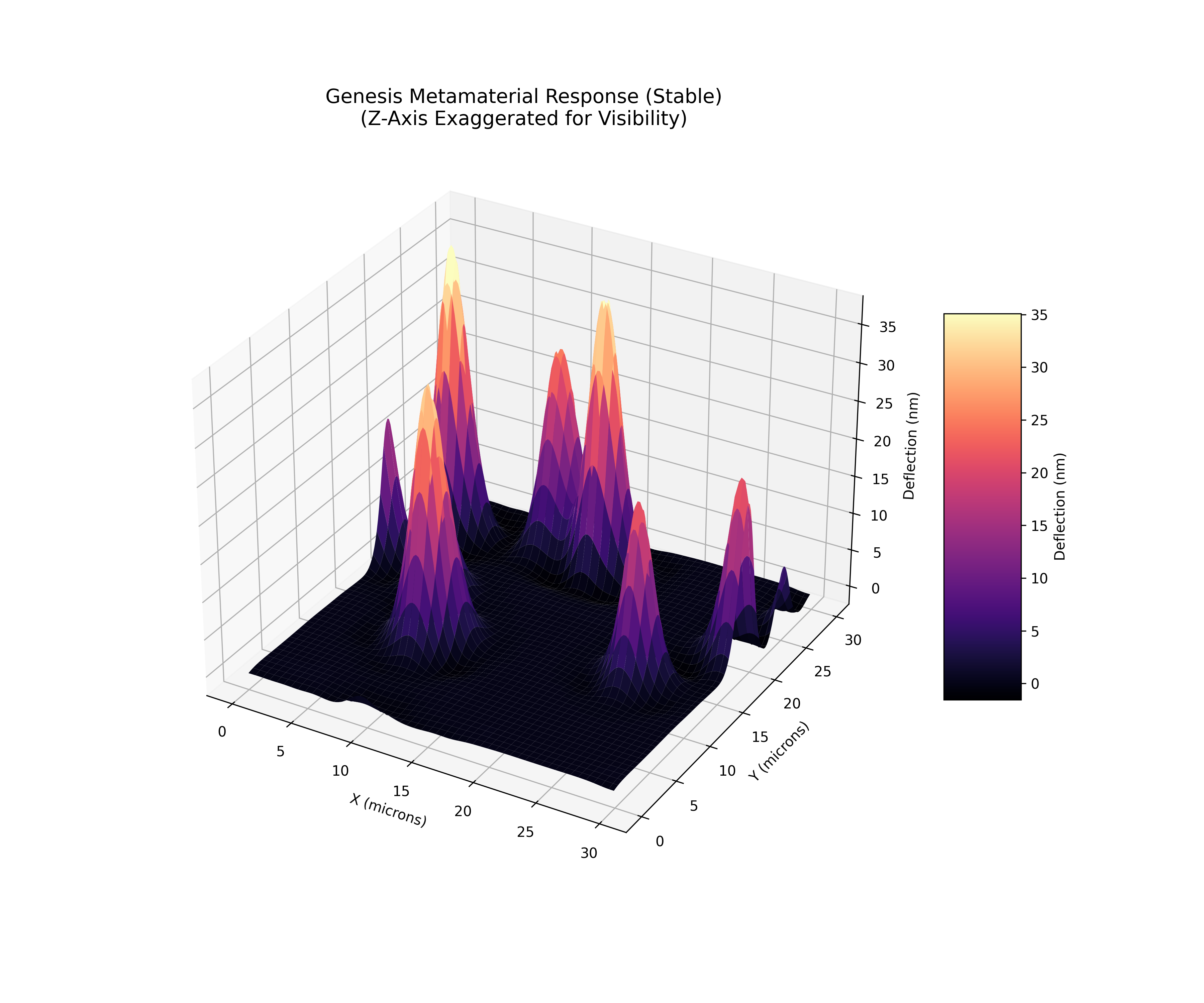
Glass PDKONLY glass-specific PDK in existence; 2-4x cheaper than CoWoS; 50±2 Ohm via BEM (HFSS pending)
Isocompiler — animated simulation
Isocompiler22-39 dB frequency-dependent isolation (adjoint r=1.0, 27 dB topology optimization)
Isocompiler — evidence chart
Isocompiler22-39 dB frequency-dependent isolation (adjoint r=1.0, 27 dB topology optimization)
Isocompiler — supplementary evidence
Isocompiler22-39 dB frequency-dependent isolation (adjoint r=1.0, 27 dB topology optimization)
Isocompiler — supplementary evidence
Isocompiler22-39 dB frequency-dependent isolation (adjoint r=1.0, 27 dB topology optimization)

Technical Deep Dive

Detailed breakdown of each relevant data room — scope, verification status, and key evidence artifacts.

PROV 7Reduced to Practice

Glass PDK

The ONLY glass-specific PDK in existence. Compiles YAML spec-in to GDSII-out in <1s with 22 physics solvers, 50±2 Ohm BEM impedance (internal consistency validated; HFSS validation pending), EDA export, and yield/feasibility workflows. ML surrogate being retrained (was R²=0.537).

Files
726
Claims
89 (8 patent families)
Key Metric
ONLY glass-specific PDK in existence; 2-4x cheaper than CoWoS; 50±2 Ohm via BEM (HFSS pending)

Verified Evidence

605 analytically screened design points528-test suite; 50±2 Ohm via BEM (internal consistency validated; HFSS validation pending)158 S2P files; HFSS/Sigrity export paths
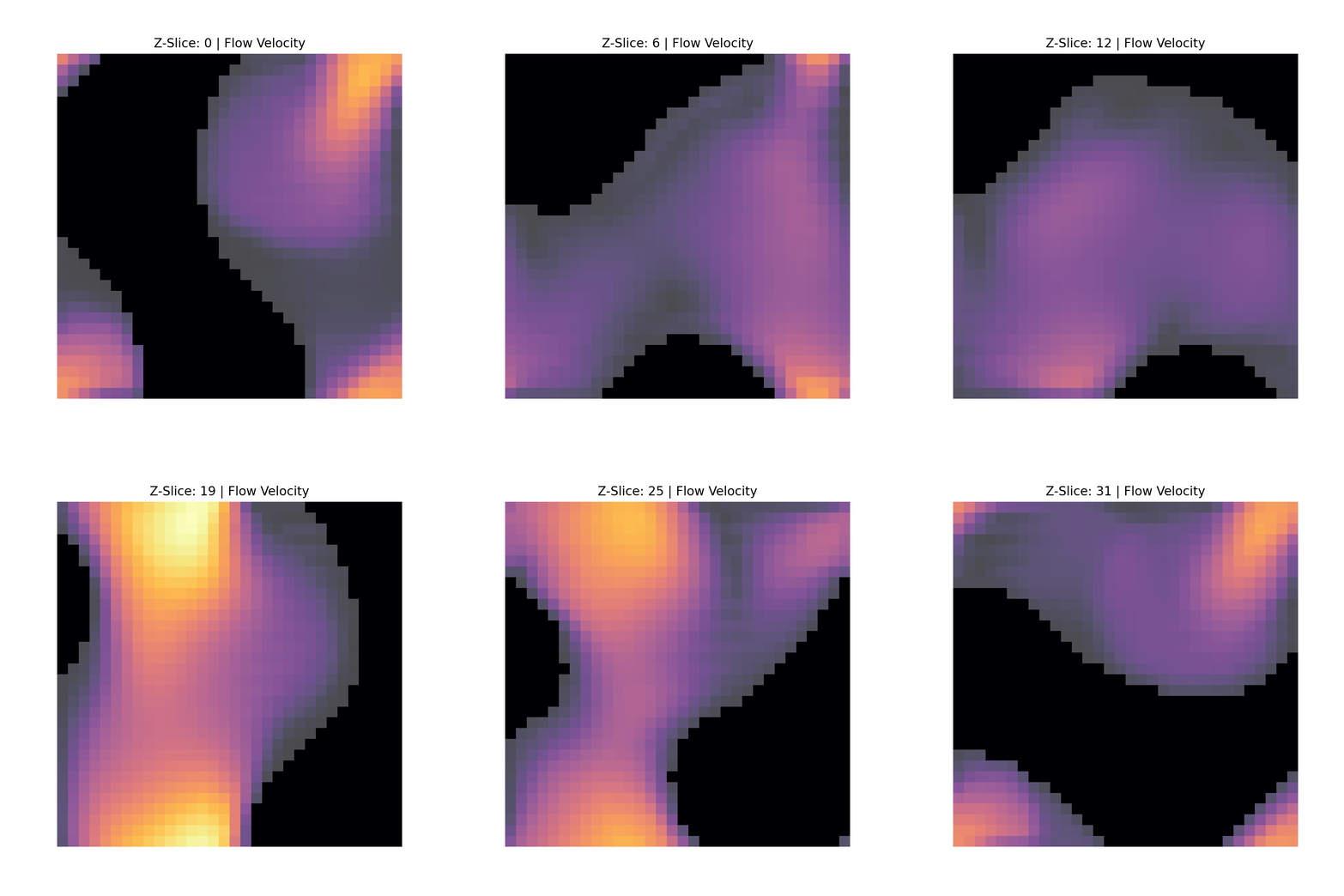
Glass PDK evidence
PROV 8121 tests pass

Isocompiler

Synthesizes EM isolation structures for multi-die chiplets using FDTD/adjoint/Nevergrad workflows and outputs foundry-ready artifacts.

Files
490
Claims
72
Key Metric
22-39 dB frequency-dependent isolation (adjoint r=1.0, 27 dB topology optimization)

Verified Evidence

Synthesis families: via/EBG/metasurface/inverseKLayout DRC runset integrationPalace and Meep adapters
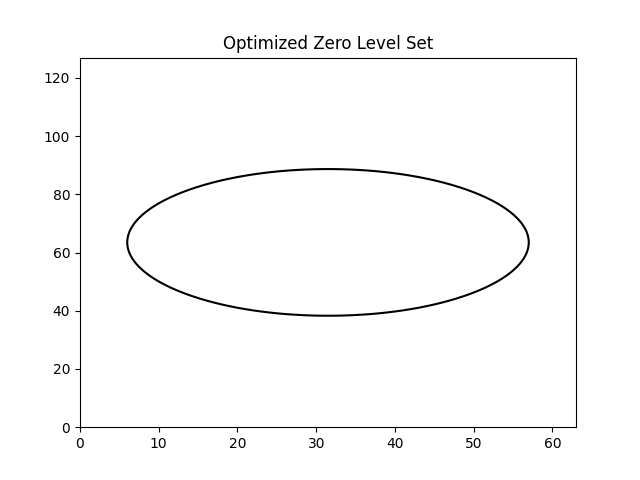
Isocompiler evidence

Why Existing Tools Fail

Cadence acquired OpenEye Scientific for $500M to enter computational molecular design, signaling that major EDA companies see physics-based synthesis as a strategic growth vector. Google DeepMind published GNoME, demonstrating AI-driven discovery of 380,000 stable materials — proving that physics-native generative AI works at scale. Siemens continues expanding Simcenter's AI-assisted simulation capabilities across thermal, structural, and CFD domains. COMSOL provides general-purpose multiphysics simulation but remains a verification tool with no inverse design capability. None of these competitors have a unified physics synthesis engine with validated solvers across 9 domains, an integration-ready API surface, and a blocking patent portfolio. The synthesis gap is real, it is closing, and whoever fills it first defines the next era of EDA.

Physics Synthesis vs. Verification Only

Genesis Platform

Genesis generates designs from physics constraints — specify thermal limits, stress bounds, and frequency targets, and the engine synthesizes geometry satisfying all constraints simultaneously. The Isocompiler demonstrates this directly: input an EM isolation spec, output a foundry-ready structure with 22-39 dB frequency-dependent improvement (adjoint r=1.0, 27 dB topology optimization). This is inverse design — target-to-geometry, not geometry-to-check.

Incumbent Tools

Cadence Virtuoso, Synopsys PrimeTime, and all existing EDA tools operate forward-only: the designer draws geometry, the tool verifies compliance. Physics is discovered after design, not enforced during design. No commercially available EDA tool generates geometry from physics objectives.

Multi-Physics Coupling: 9 Domains vs. Siloed Solvers

Genesis Platform

104 solvers across 9 physics families in a single differentiable pipeline: thermal (FEM + LBM), structural (biharmonic + phase field), electromagnetic (FDTD + adjoint), photonic, chemical (DFT), molecular dynamics, phase field, electrochemistry, and hybrid bonding. Cross-domain coupling means thermal stress, EM interference, and structural deformation are solved simultaneously, not in separate tools with manual iteration.

Incumbent Tools

Siemens Simcenter provides strong multi-physics capability but operates as a verification tool — it checks coupled physics after design, it does not synthesize designs from coupled physics targets. Domain coupling requires manual setup of co-simulation interfaces between separate solver environments.

AI-Driven Material and Structure Discovery

Genesis Platform

Genesis includes computational discovery engines: 730 candidate molecular scaffolds (20 DFT-verified) for selective chemistry, TPMS gyroid topology optimization for thermal and structural design, and adjoint-based inverse design for electromagnetic structures. The platform does not just simulate known designs — it discovers new ones that satisfy physics constraints no human designer would conceive.

Incumbent Tools

Google DeepMind's GNoME discovered 380,000 stable materials but has no EDA integration, no design synthesis capability, and no commercial product. It demonstrates that physics-native AI works but cannot be purchased or integrated into a design flow. Cadence's OpenEye acquisition targets molecular simulation for drug discovery — a single domain, not a multi-physics EDA platform.

Integration Architecture: API-First vs. Monolithic Desktop

Genesis Platform

87 FastAPI endpoints with Pydantic-typed interfaces, Python SDK, Typer CLI with 30+ commands. GDSII output, KLayout DRC runset generation, HFSS/Sigrity/SPICE export from the Glass PDK. SolverBridge abstracts between CalculiX, OpenFOAM, Meep, and native solvers. Designed for programmatic integration into existing EDA automation, not as a standalone desktop tool.

Incumbent Tools

COMSOL Multiphysics is a powerful general-purpose solver but operates as a monolithic GUI application with limited API automation. Integration into EDA toolchains requires custom middleware. Simcenter offers better automation but still centers on verification workflows, not synthesis pipelines that feed into place-and-route.

Patent Portfolio: Blocking Synthesis IP vs. Verification-Only IP

Genesis Platform

1,037 claims across 9 data rooms covering physics-constrained generative AI, inverse design from physics objectives, electromagnetic isolation synthesis (72 claims), glass substrate design automation (75 claims), multi-physics coupling, Marangoni thermal management, solid-state battery architectures, and computational molecular design. This portfolio blocks competitive entry into physics synthesis for EDA.

Incumbent Tools

Cadence's OpenEye acquisition brought molecular simulation IP for a single domain. Siemens holds simulation patents but none covering physics-native synthesis. Google's GNoME is published research with no filed product patents. No competitor holds blocking IP on the general capability of generating designs from multi-physics constraints.

Validation Rigor: Quantified Accuracy vs. Black-Box Confidence

Genesis Platform

Every solver validated against analytical solutions or published benchmarks: FEM vs. free thermal expansion (<5% error), LBM vs. Poiseuille flow (<1% error), FDTD vs. plane wave propagation (<1% error), phase field vs. Allen-Cahn dynamics. 864 validation cases. <0.1% hallucination rate defined precisely as outputs outside 2 sigma of expected values. Public validation methodology.

Incumbent Tools

Commercial solvers are well-validated individually but AI-augmented features (Cadence Cerebrus, Synopsys DSO.ai) optimize geometric and timing metrics without physics validation of the generated designs. No competitor publishes a quantified hallucination rate for physics outputs or provides public validation against analytical benchmarks.

Common Objections

Technical pushback we've heard — and the data that resolves it.

Ansys is the best verification platform ever built — and it is exactly complementary to Genesis, not redundant with it. Ansys runs simulations after a design exists. Genesis generates designs before simulation is needed. Verification answers 'does this work?' Synthesis answers 'what will work?' Adding Genesis to the Ansys stack creates the first EDA platform that covers both directions: synthesis to produce candidate designs, verification to certify them. This is the physics-to-design loop that no competitor has. The $35B Ansys investment becomes more valuable, not less, when paired with a synthesis engine that feeds it better designs to verify.

Implementation Timeline

1

0-30 days: Integration Proof-of-Concept

Deploy the Isocompiler pipeline as a solver-verified inverse-design plugin within the Synopsys EDA flow. Run the 132-test validation suite against Synopsys internal benchmarks. Demonstrate end-to-end EM isolation synthesis: input specification, FDTD simulation, adjoint optimization, structure generation, KLayout DRC output. Validate that the 87 FastAPI endpoints interface cleanly with existing Synopsys automation infrastructure.

2

31-90 days: Ansys Co-Simulation Benchmark

Integrate the Genesis solver stack with the Ansys multi-physics workflow to demonstrate the synthesis-then-verification loop. Benchmark physics hallucination rate against Synopsys internal AI tools using the 864-case validation database. Evaluate the Glass PDK as a design enablement layer for glass substrate customers. Assess cross-domain solver coverage (thermal + structural + EM) against Synopsys product roadmap gaps.

3

91-180 days: Strategic Assessment and IP Review

Complete patent portfolio review across all 1,037 claims and 9 data rooms. Map Genesis IP coverage against competitive threats (Cadence OpenEye, Google GNoME, Siemens Simcenter). Develop product integration roadmap for the combined Synopsys + Ansys + Genesis platform. Define go-to-market strategy for physics synthesis as a new EDA product category.

Diligence Checklist

132 tests passing in Isocompiler.

104 solver modules across 9 families in the core ecosystem.

FastAPI + Typer interfaces for automation integration.

Ready to validate?

Every metric in this dossier is backed by reproducible computational evidence. Request a technical briefing to review the data firsthand.